Marsyas
A satyr picked up the pipes a goddess threw away, and challenged Apollo to a contest.
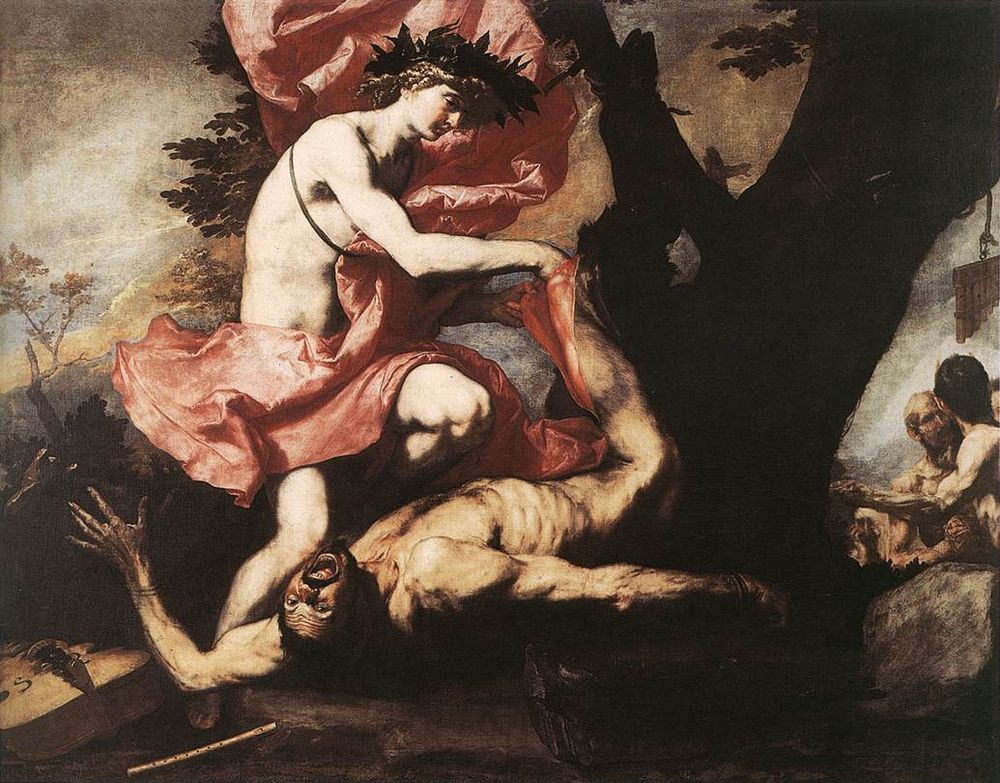
Marsyas was a satyr of Phrygia who played the aulos, the double pipe, so well that he challenged Apollo. He lost, and the price was his skin. The Greeks placed the story at Kelainai, today's Dinar in Afyonkarahisar, where a river named after him rose from a cave.
- Who
- A satyr of Phrygia who played the aulos
- Where
- Kelainai, today's Dinar, Afyonkarahisar
- Instrument
- Aulos, a pair of reed pipes played together
- See it
- Ribera's Apollo flaying Marsyas, 1637, Naples
The pipes
Athena made the first aulos, a pair of reed pipes played together. When she saw her puffed cheeks reflected in water as she played, she threw the pipes away and cursed whoever picked them up. Marsyas did, and taught himself to play until people said he made better music than Apollo's lyre.
The contest
Apollo accepted the challenge on one condition: the winner could do what he liked with the loser. The Muses judged. In the version told by Apollodorus, Apollo turned his lyre upside down and played it that way, and dared Marsyas to do the same with his pipes. Marsyas could not. Apollo hung him from a pine tree and flayed him.
Ovid adds that the satyrs, nymphs and shepherds who mourned him wept so much that their tears became a river, the Marsyas.
The place
Xenophon, who passed through Kelainai with a Greek army in 401 BC, writes that the river Marsyas rose there below the royal palace, and that the satyr's skin was said to hang in the cave the spring came from. Herodotus says it hung in the town square. The river flowed into the Maeander, today's Büyük Menderes.
Painters returned to the scene for centuries. Jusepe de Ribera's version, with Apollo calm and Marsyas upside down and screaming, is among the most unsparing.