Niobe
A mother who boasted of her children, and a rock on Spil Dağı that is said to weep for them still.
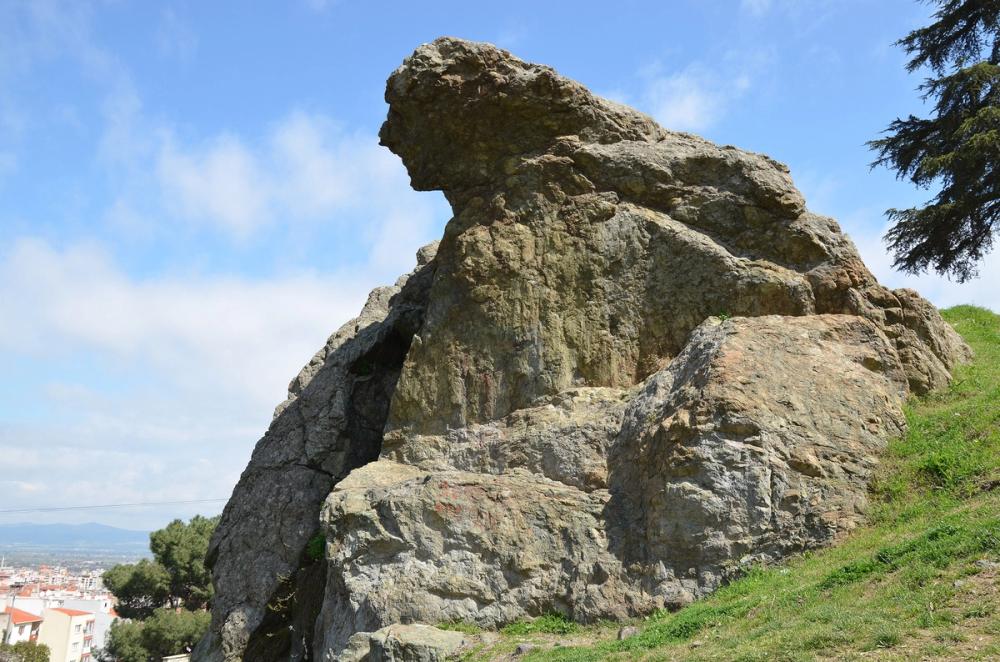
Niobe, daughter of Tantalus, boasted that she had more children than the goddess Leto, who had only two: Apollo and Artemis. The twins killed all of hers. Turned to stone on Mount Sipylus, today's Spil Dağı above Manisa, she weeps forever; the Weeping Rock there is still pointed out as her.
- Who
- Daughter of Tantalus, queen of Thebes
- Where
- Mount Sipylus, today's Spil Dağı, Manisa
- See it
- The Weeping Rock (Ağlayan Kaya) on Spil Dağı
The boast
Niobe was queen of Thebes, but she came from Sipylus, where her father Tantalus ruled. How many children she had depends on who tells it: twelve in Homer, fourteen in Ovid. At a festival for Leto she told the women of Thebes to honour her instead, a mortal with seven times the children.
Leto sent her twins. Apollo shot the sons, Artemis the daughters. In Ovid, Niobe begs for the youngest to be spared, and is answered with one last arrow.
The stone
Grief turned her to stone. A wind carried her home to Sipylus, and there, Homer says, she broods on her sorrows among the rocks. Pausanias, the Greek travel writer of the 2nd century AD, climbed up to see her: close by, he writes, it is just a rock and a cliff, but from further away it looks like a woman in tears with her head bowed.
The rock today
The Weeping Rock, Ağlayan Kaya, is a natural formation on the slopes of Spil Dağı above Manisa. After rain, water seeps down its face. Not far away is a much older carving, the Taş Suret, a seated figure cut into the mountain in the Bronze Age; it is sometimes mistaken for Niobe, but it was most likely made for a mother goddess.