Electrum
Gold and silver, mixed by nature: the metal of the first coins.
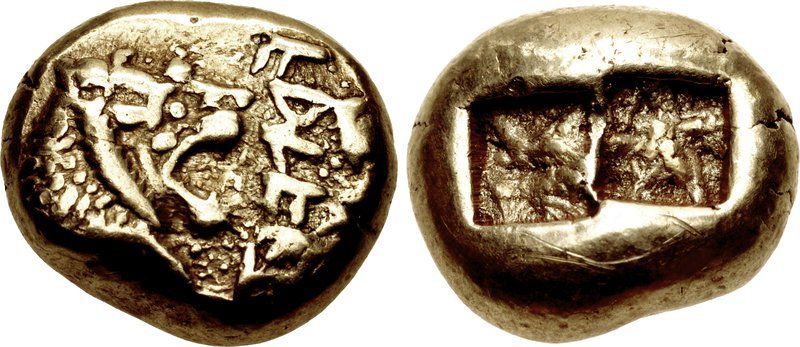
Electrum is a natural alloy of gold and silver. In Lydia it washed down from Mount Tmolus, today's Bozdağ, in the Pactolus river, and in the late 7th century BC it became the metal of the first coins.
- What
- A natural alloy of gold and silver
- Where
- Carried by the Pactolus river past Sardis
- Used for
- The first coins
- Also called
- White gold, in ancient Greek
It is paler than gold, and the Greeks called it white gold; Herodotus uses the phrase for the alloyed ingots Croesus sent to Delphi. Because the share of gold in natural electrum varies, a lump's worth was hard to judge by eye. A royal stamp settled it: Lydian coins, marked with a lion's head, were made to set weights, and the mint could add silver to keep the mix steady.
Some of the earliest known coins were found buried in the foundations of the Temple of Artemis at Ephesus. Myth explains the river's gold too: King Midas washed his golden touch away in the Pactolus.
 Myson · Wikimedia Commons (Public domain)
 User:China_Crisis · Wikimedia Commons (CC BY-SA 2.5)